Terminal View
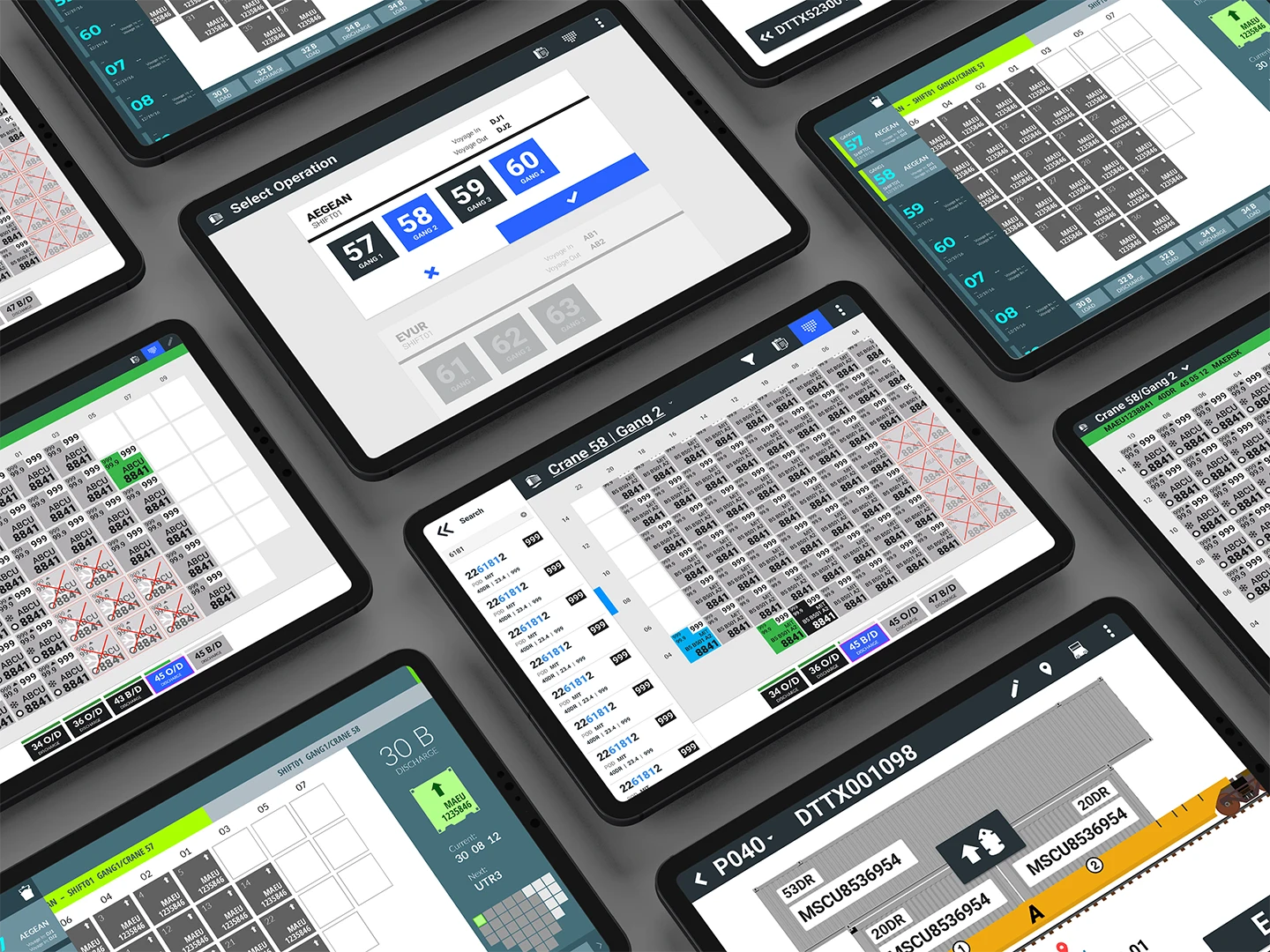
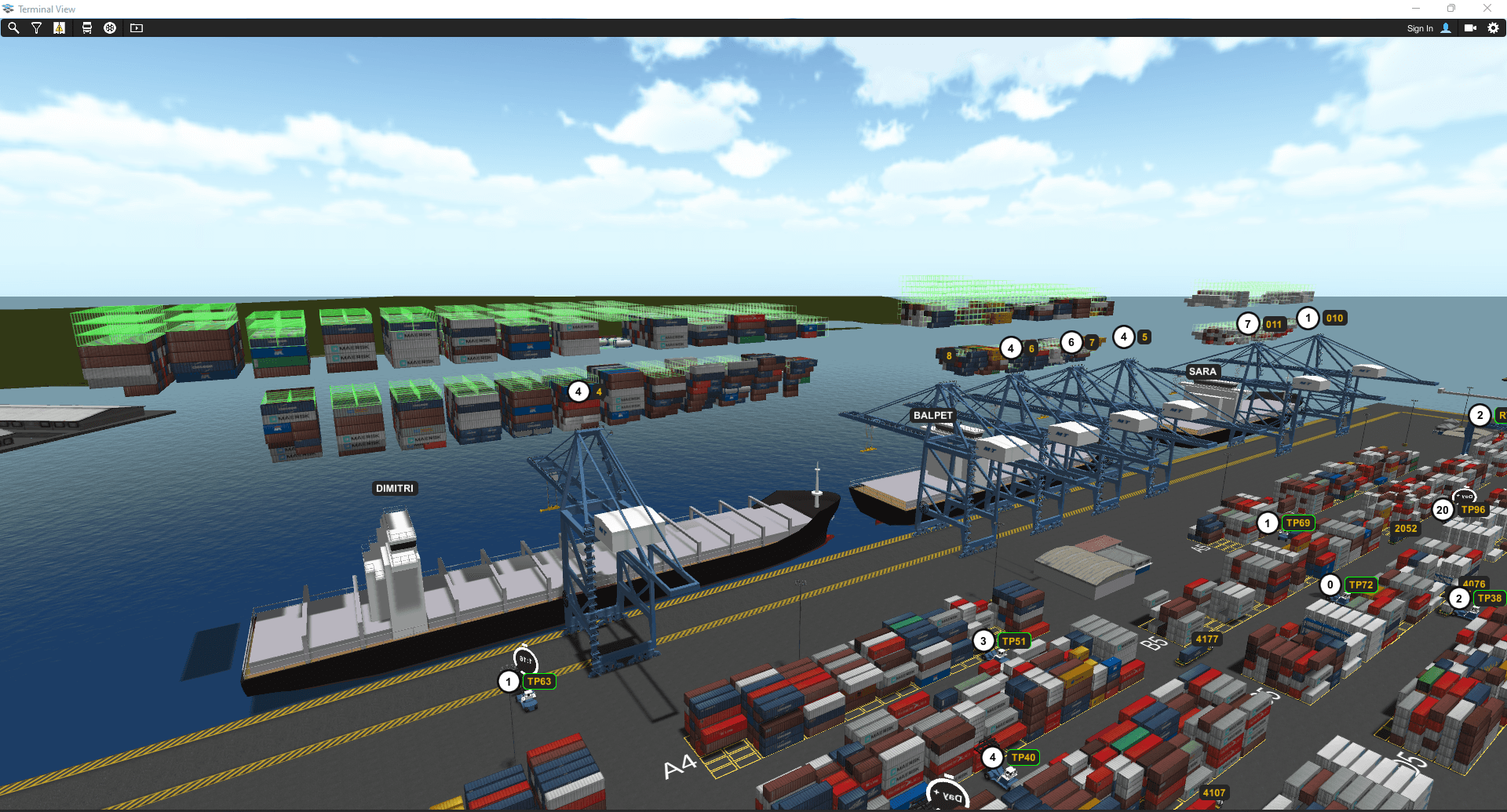
The operations lived in spreadsheets. Seeing where things actually were took an expert, and often a walk into the yard. Terminal View is the live 3D digital twin that let operators see the whole yard in real time, from an idea that evolved from a prototype.
Contribution
Client
Duration
Year
Challenge
A manager could run a shipping terminal all day and never see it.
Container terminal operations move millions of containers per year. They also manage a fleet of trucks and moving equipment in a busy yard with low visibility. Managers stitch the picture together from at least five separate products, each with their own cadre of spreadsheets. But did they agree? When something didn't add up, they picked up a radio or walked the yard themselves.
They were losing up to a quarter of their day just chasing information. The data existed. Seeing it as one live picture did not.

The Bet
“Can you turn this into something terminals can actually use?” I said absolutely.
The starting point was an in-house prototype: clunky, barely interactive, and wired tightly to old systems. I was asked to build a team and turn it into something terminals could actually use, with no set budget and six months to do it. I made the UX and UI decisions, hired a 3D designer, and brought in a developer, and we all worked off of each other's strengths to build it.
My job was mostly to make the design calls, clear the path, and be there when they needed me. The 3D designer knew the craft cold, including the breakthrough that made global scale possible, building each terminal remotely from the CAD drawings and map data every site already had, so no one had to fly around the world to model a yard. I kept the experience coherent and made sure the two of them had what they needed to move fast.

Solution
Not a 3D map. Definitely not a video game. A way to make decisions.
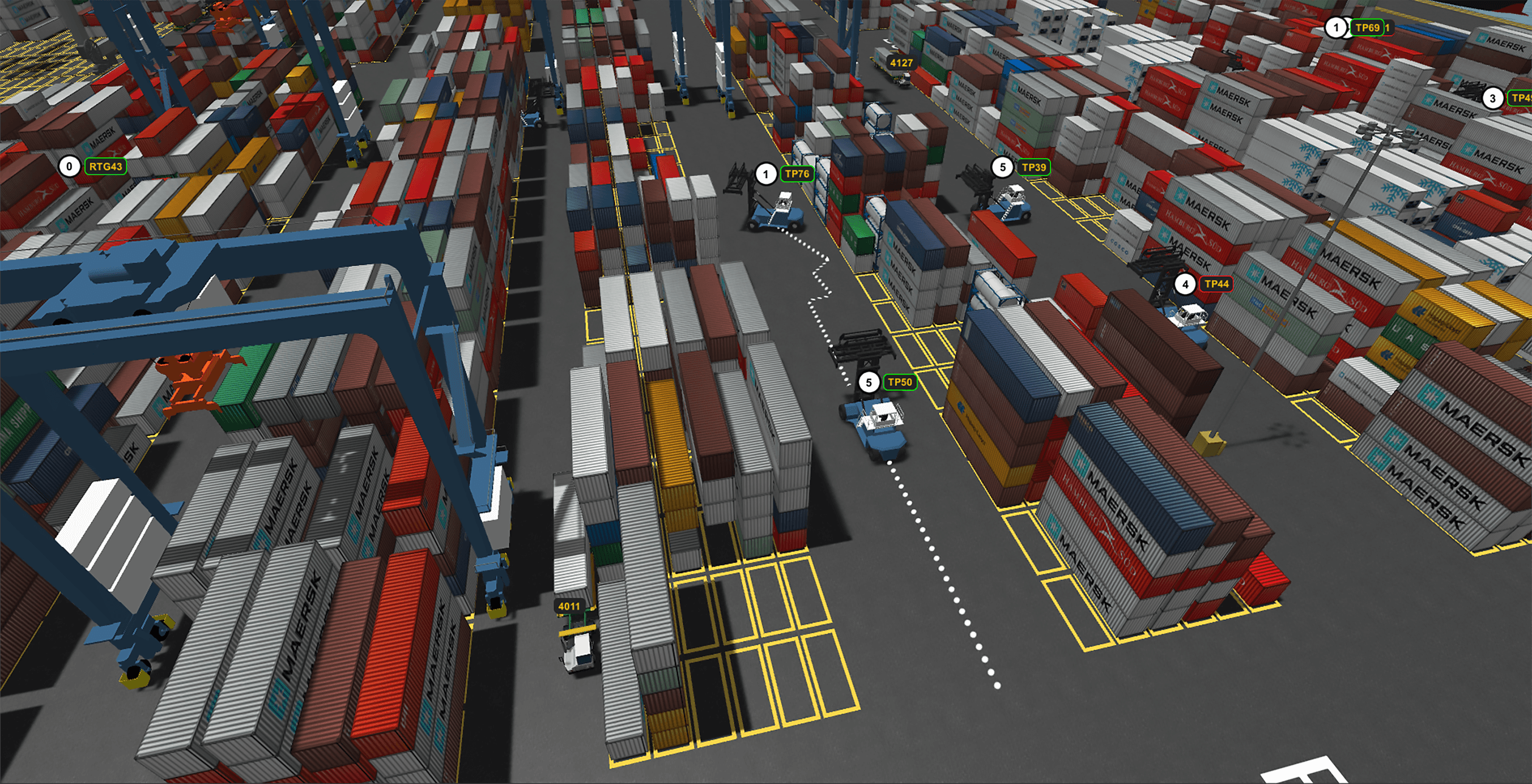
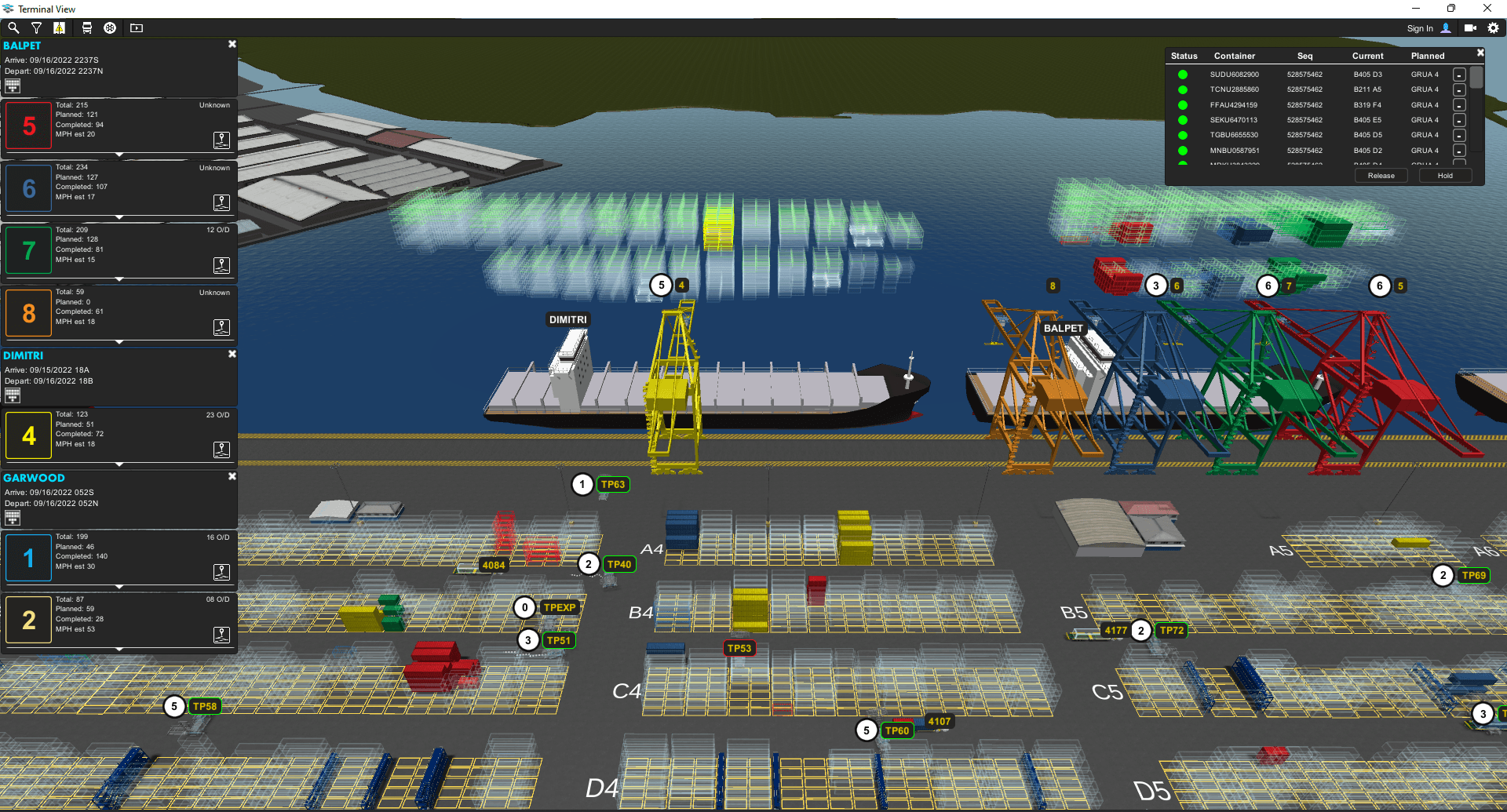
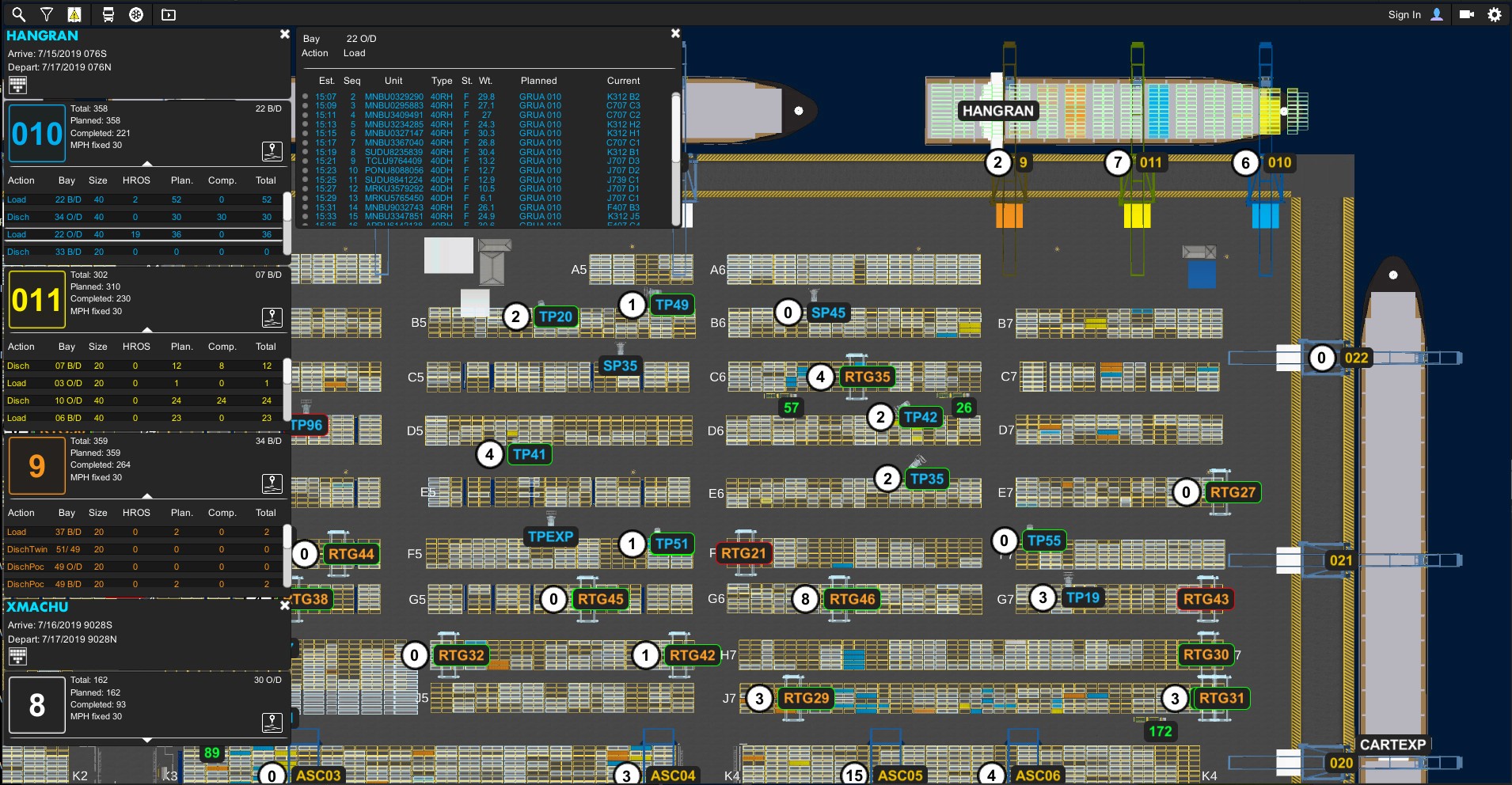
The risk was building something that looked impressive and helped no one. So Terminal View put the entire operation on one live screen. Equipment moved in real time, with a warning the moment two paths would cross. Container positions sat exactly where they really were (or where the data said they were), placed with GPS. A replay turned incident investigations from hours of interviews into minutes. And a manager could test a plan before committing to it, not just see the yard, but ask it questions.
The big idea: Yards could be built from a library of reusable 3D parts, cranes, containers, vessels, gates, so a brand-new terminal could be stood up fast without starting over. And the whole thing was designed around how operators already think: they picture the yard the way it actually is, so it showed them the yard, now alive with data that moved as the real one did.
Outcome
Nobody asked for it. Then they couldn't work without it.
With Terminal View, managers could handle issues right from their desk. Instead of piecing the picture together across separate systems, they could pull it up in one place, see what was happening, and act on it. Terminals started getting ahead of problems instead of only reacting to them.
Terminals that adopted it saw response times drop 53%, investigations get 44% faster, and managers win back about 10 hours a week, with 22% fewer safety incidents. Added up, that comes to an estimated $300K+ a year per terminal in time and cost. The first version shipped within six months, built by a three-person team, and less than a year after I brought on the 3D designer, he'd shown the organization he was ready to own the product himself.
More projects.
A curated lineup of design that earns its keep, simple on the surface, brutally intentional underneath.