Space Needle Ticket Kiosk Accessibility Study
An off-hours accessibility audit of the Space Needle's ticketing kiosks revealed a blind spot no metric was catching, and earned the mandate to redesign them.
Contribution
Client
Duration
Year
Challenge
The problem no metric was catching.
The kiosks were built to reduce lines, and the metrics said they were working. Standing next to the hardware told another story. Guests hesitated, leaned in, shielded the screen from glare, and quietly abandoned the flow. The problem never got loud enough to trigger escalation. It lived in hundreds of small moments of confusion every day.
I wasn't brought in to fix this. I was working IT, keeping the kiosks running. That proximity, hands on the hardware while people struggled beside me, is what revealed the real issue.


Approach
I dug into it on my own time.
I tracked the glare through the day, checked every approved color against the accessibility standard (WCAG 2.2 AA), measured the text and buttons against ADA guidance, and wrote down exactly where people got lost. I looked at the kiosks in use and checked the new one coming in against the same bar, so the problems would get caught before it launched instead of after.
I found where people were getting lost, tied every problem to the exact thing causing it, and turned it into a plan leadership could act on without needing it translated.
What I delivered:
A WCAG-aligned accessibility standard tied to kiosk components, type, and interaction
A shared language: simplified phrasing, action-first sequencing
A sequenced recommendation plan leadership could execute

Standards
What I set for whatever came next.
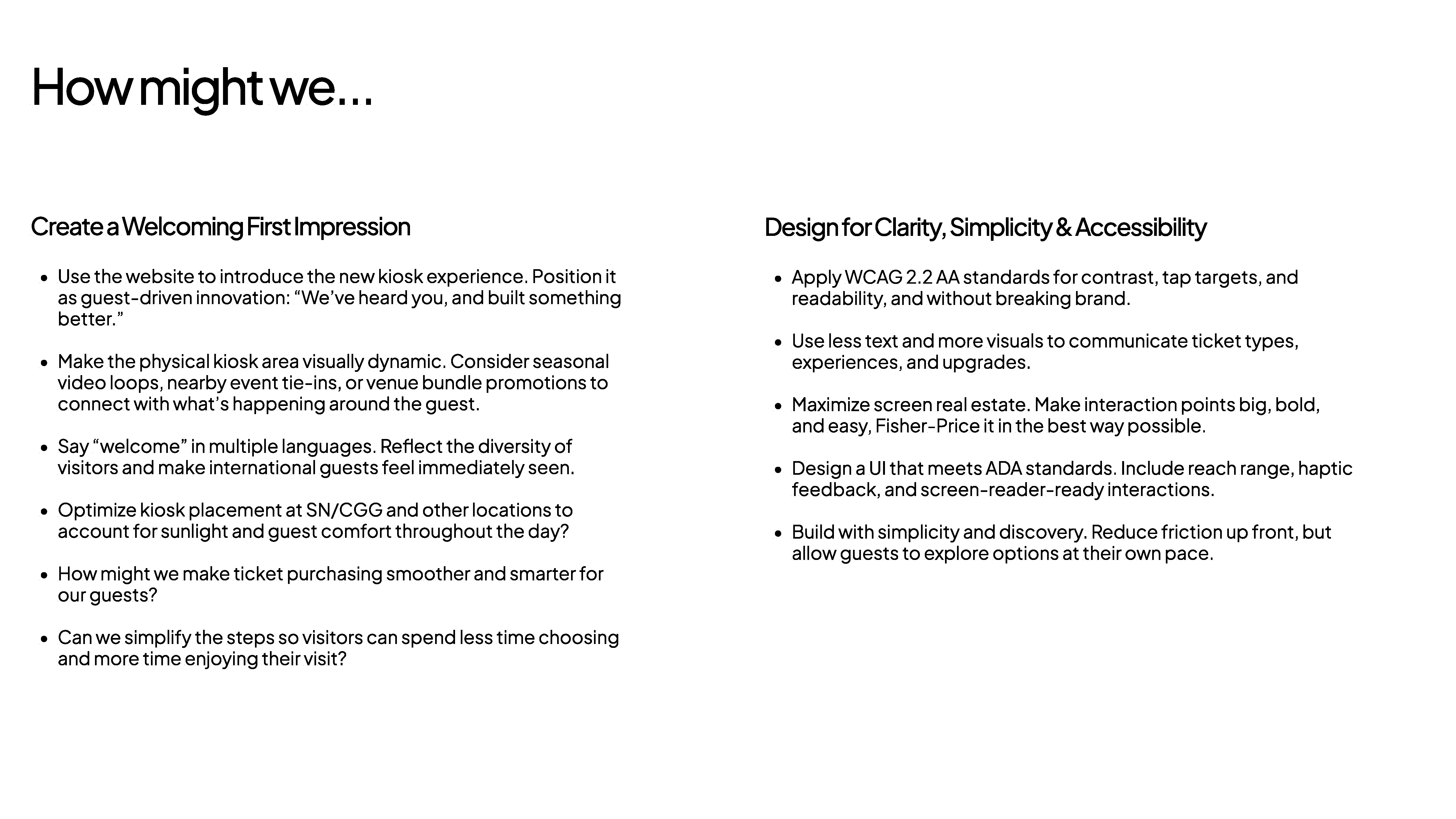
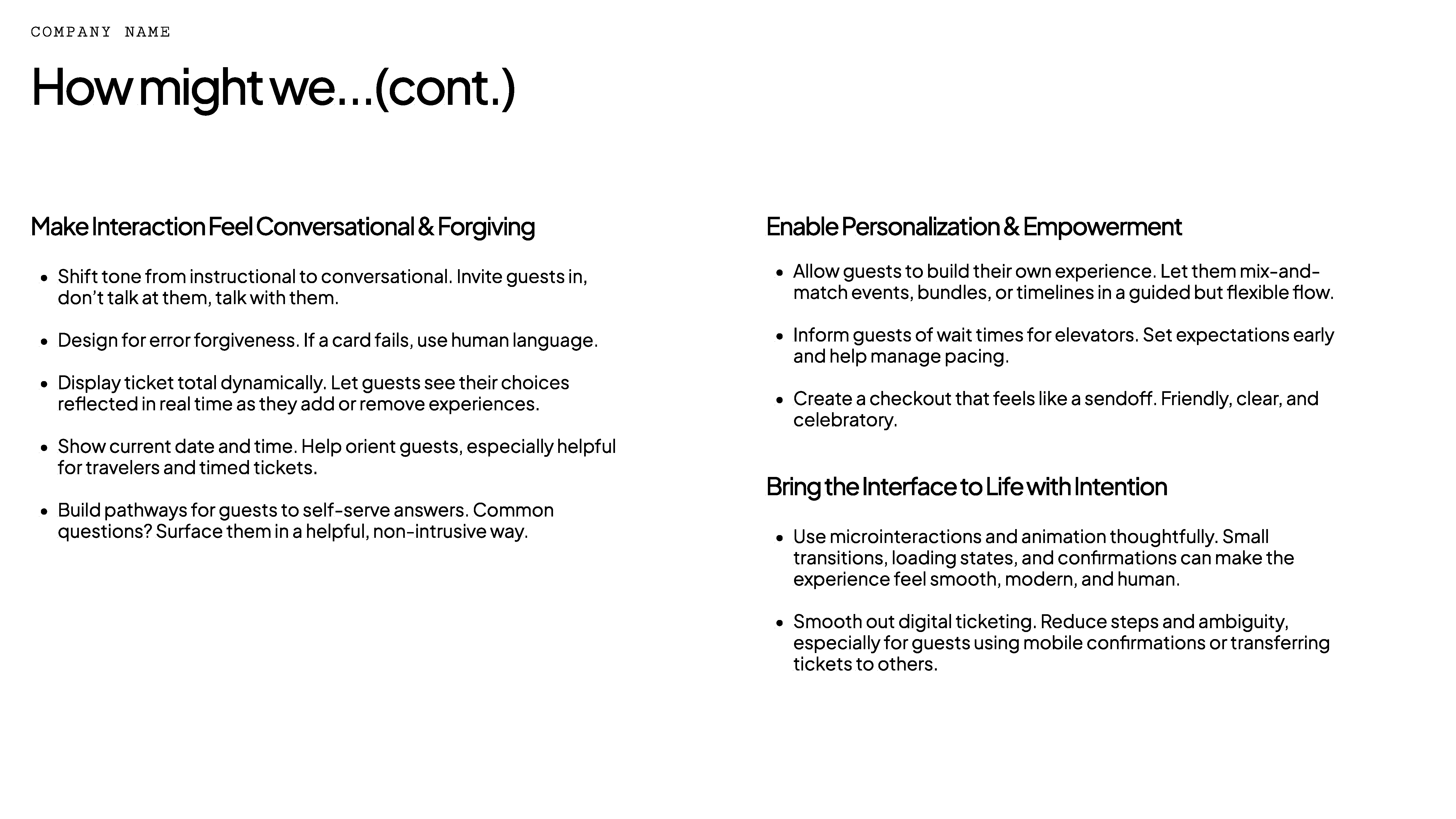
I ended with three standards, each tied to a specific part of the kiosk instead of a list of complaints. Every one of them became a requirement for the redesign later.
Readable in real conditions. A lot of the brand colors failed the accessibility standard when you actually paired them, some badly, and outdoor sun makes every one of those gaps worse.
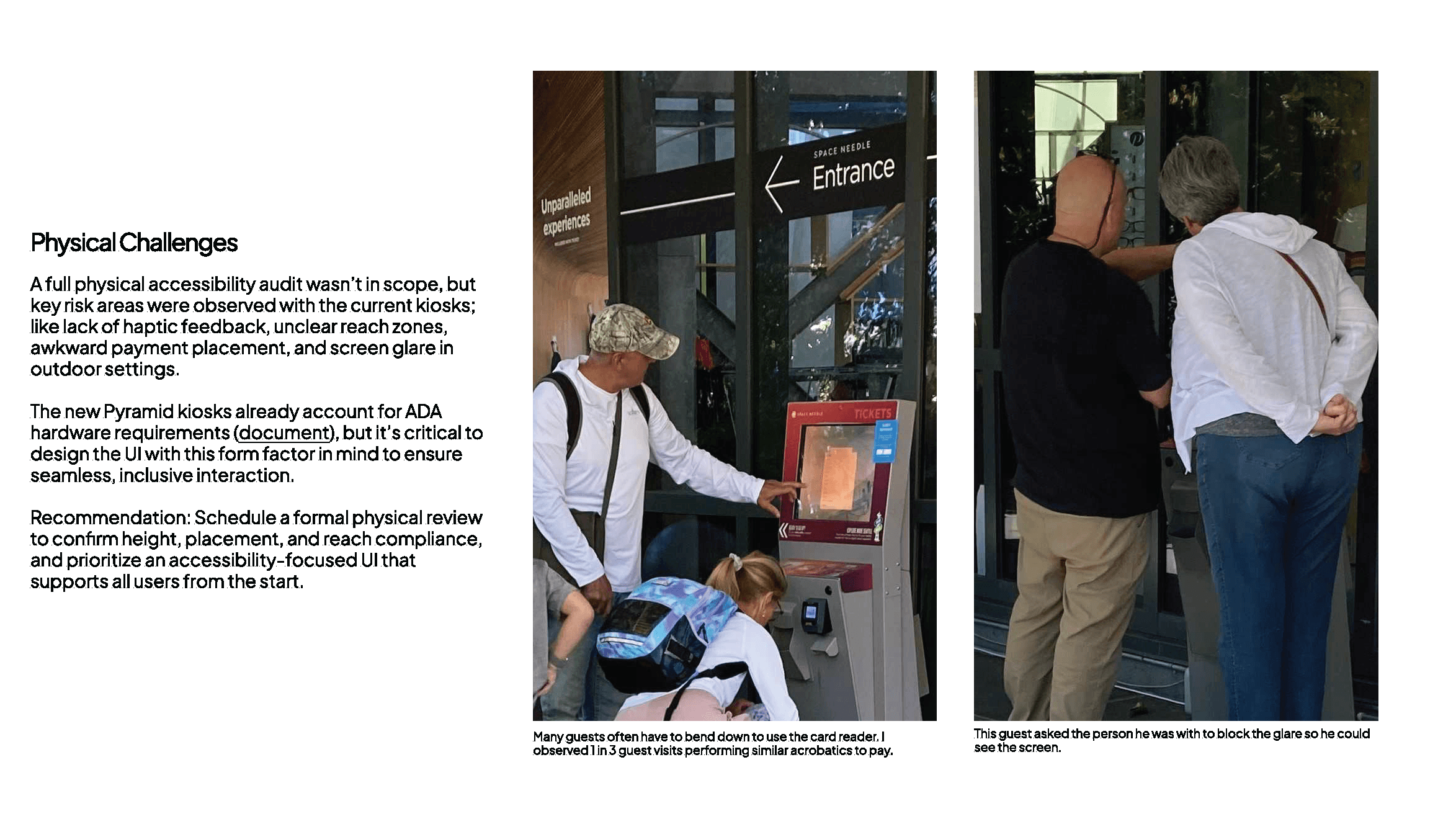
Reach matters as much as the screen. About one in three people had to contort to reach the card reader. One guy asked his friend to block the sun so he could see the screen at all.
Keep it simple, and let people undo anything. A limit on how many things one screen can ask you to decide at once, and a rule that any choice can be changed without penalty.
Outcome
What changed.
Now the organization had the actionable proof they needed to see the problem, put a number on it, and act on it with purpose. The study became the plan for a full redesign, and the reason they brought me on to lead it.
More projects.
A curated lineup of design that earns its keep, simple on the surface, brutally intentional underneath.